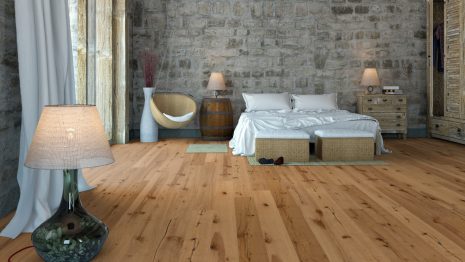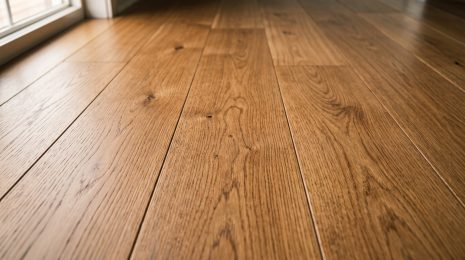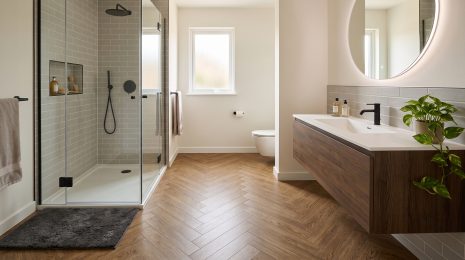


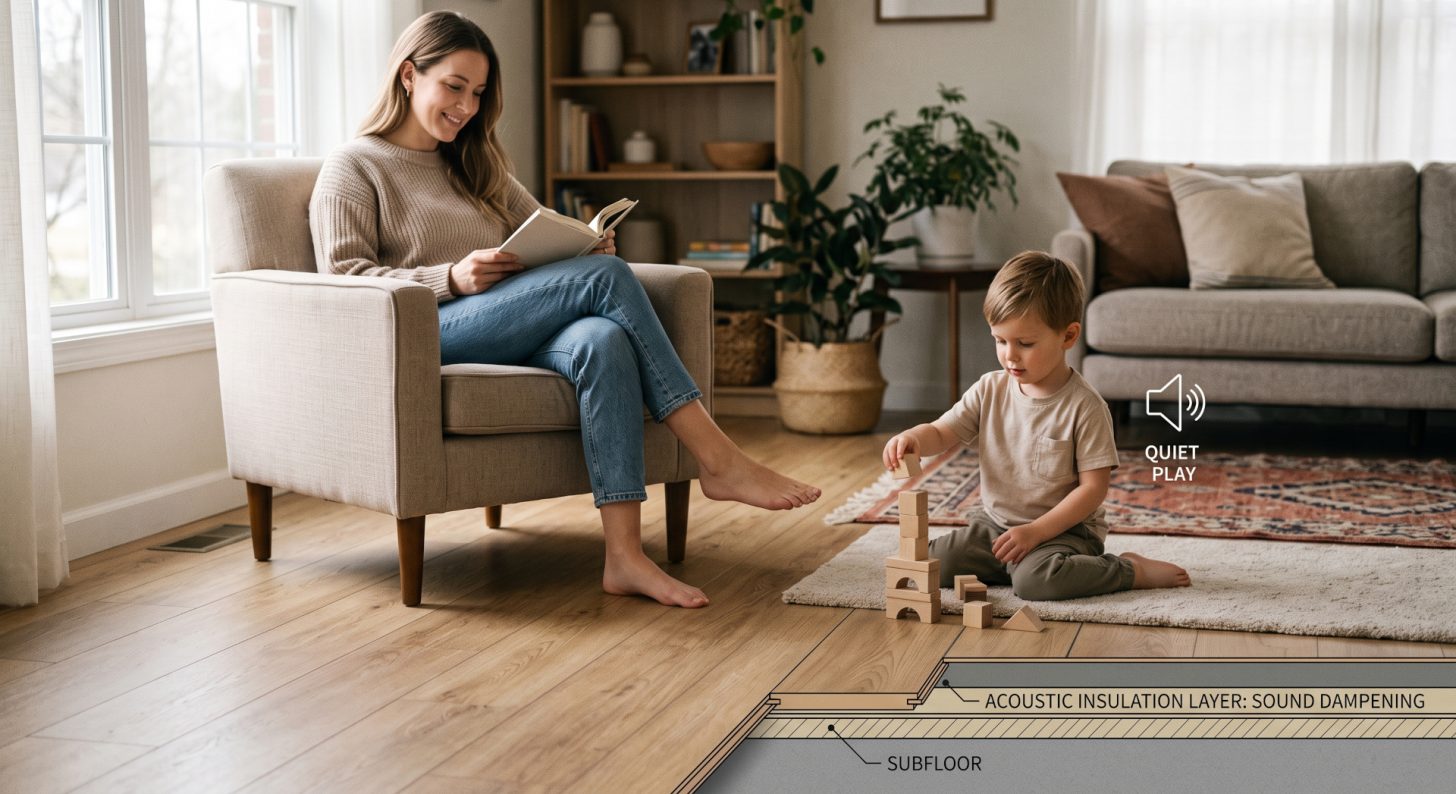
Wood and laminate flooring are popular choices for modern homes because they are attractive, practical and relatively easy to maintain. However, one issue that can sometimes become noticeable after installation is noise. Footsteps, children’s toys, pets, moving furniture and general household activity can all create more sound than expected.
The good news is that excessive noise from laminate and wood flooring can often be reduced significantly by choosing the correct underlay and installing the floor properly.
A high-quality Wood Flooring Underlay or Laminate flooring underlay can make a considerable difference to the way a floor sounds and feels. If reducing impact noise is a priority, a well-designed sound resistant underlay should be considered as part of the flooring system rather than as an afterthought.
Jump to section
Why Can Wood and Laminate Flooring Be Noisy?
Hard flooring naturally behaves differently from carpet. When someone walks across a wooden or laminate floor, the impact of their foot can travel through the floor structure. Depending on the construction of the building, some of that sound can be heard in the room below or transmitted through adjoining areas.
There can also be noise within the room itself. Hard surfaces reflect sound, which can make a room feel more lively or echoey, particularly where there is less furniture.
A floor that has not been properly prepared can create additional problems. Uneven subfloors, unsuitable underlay, movement between boards or inadequate expansion gaps can all contribute to unwanted sounds such as tapping, clicking, creaking or hollow-sounding footsteps.
The solution therefore starts with the sub floor preparation itself.
What Does Flooring Underlay Actually Do?
Underlay is sometimes regarded as simply a thin layer placed between the subfloor and the flooring. In reality, the right underlay performs several important functions.
It can help compensate for minor imperfections in the subfloor, improve comfort, reduce impact noise and provide a protective layer between the flooring and the surface beneath it.
For laminate flooring, the correct underlay is particularly important because laminate is generally installed as a floating floor. The boards are not normally fixed directly to the subfloor, so the underlay forms an important part of the overall floor construction.
With timber flooring, the requirements depend on whether the floor is solid or engineered, how it is being installed and what the manufacturer recommends. This is why choosing a Wood Flooring Underlay should be based on the actual flooring system rather than simply selecting the thickest product available.
What Is Sound Resistant Underlay?
Sound resistant underlay is specifically designed to reduce the transmission of sound through a flooring system.
There are two main types of noise worth considering. Impact sound is created when something physically hits the floor, such as footsteps, while airborne sound travels through the air, such as voices or television noise. Underlay is particularly useful for reducing impact noise.
A good acoustic underlay absorbs some of the energy generated when the floor is walked on. Instead of allowing that impact to transfer directly into the structure below, the underlay helps dissipate it.
The result can be a floor that sounds less harsh and feels more solid and comfortable when walked across.
10 Reasons to Buy a Sound Resistant Underlay
1. Reduce Footstep Noise
One of the most obvious benefits is the reduction of noise caused by walking. Shoes, children’s footsteps and pets can all create impact sounds on hard flooring. A suitable acoustic underlay can help soften these sounds.
2. Make Upstairs Rooms Quieter
If you are installing flooring in an upstairs bedroom, landing or living room, reducing impact noise can make the rooms below considerably more pleasant. This is particularly useful in homes where bedrooms are positioned beneath active living spaces.
3. Improve Underfoot Comfort
Underlay can add a degree of cushioning beneath the flooring. This can make walking across the floor feel less hard and rigid, particularly compared with flooring installed directly onto a solid substrate.
4. Reduce the Hollow Sound
Some laminate floors can produce a hollow or slightly resonant sound when walked on. A suitable Laminate flooring underlay can help reduce this effect and give the finished floor a more substantial acoustic quality.
5. Improve the Overall Feel of the Floor
Acoustic performance is not only about how much noise reaches the room below. A properly supported floor can feel more refined underfoot. The right underlay can contribute to a quieter and more comfortable flooring installation.
6. Help Protect the Flooring
Underlay creates a separation between the flooring and subfloor. Depending on the flooring system, this can help reduce direct contact and protect the underside of the boards from certain stresses associated with normal use.
7. Deal with Minor Subfloor Imperfections
Some underlays can accommodate small variations in the subfloor. This does not mean underlay should be used to disguise a seriously uneven surface, but it can help provide a more suitable base where the substrate is already adequately prepared.
8. Create a More Comfortable Home
Reducing unnecessary background noise can have a surprisingly positive effect on how a home feels. A quieter floor can be especially valuable in open-plan houses, flats and busy family homes.
9. Improve the Quality of a Flooring Installation
A flooring system should be considered as a complete construction rather than simply a collection of boards. The subfloor, underlay, flooring and installation method all need to work together. Choosing an appropriate sound resistant underlay is one way to improve the overall specification.
10. Add Long-Term Value to the Flooring
Investing in good-quality underlay is relatively small compared with the cost of replacing an entire floor. Selecting the correct product at the installation stage can help ensure the flooring performs as intended for many years.
Choosing the Right Wood Flooring Underlay
When selecting Wood Flooring Underlay, it is important to establish exactly how the timber floor will be installed.
Engineered wood flooring, for example, may be floated over an acoustic underlay or installed using another method, depending on the manufacturer’s specification. Solid wood flooring can have different requirements again.
The thickness, density and acoustic characteristics of an underlay can all affect its performance. Simply choosing the thickest material is not necessarily the best approach. An underlay that is too soft or unsuitable for the flooring could potentially affect the stability of the installation.
Always consider the flooring manufacturer’s recommendations and the construction of the subfloor before making a decision.
Choosing Laminate Flooring Underlay
The same principle applies when selecting Laminate flooring underlay.
Laminate flooring relies heavily on the correct base because it is commonly installed as a floating system. An acoustic underlay should provide appropriate support while also helping to control impact noise.
It is important to check whether the laminate already has an integrated underlay. Adding another layer underneath an integrated product may not be recommended and could affect the performance or stability of the floor.
A good installation should also include proper preparation of the subfloor. Underlay is not a substitute for correcting significant dips, high spots or structural problems.
Don’t Ignore the Subfloor
If a floor is making excessive noise, the underlay may not be the only factor.
A poorly prepared subfloor can lead to movement beneath the boards. This movement may produce squeaks, clicks or creaks that cannot be completely eliminated simply by adding a thicker underlay.
Before installing new flooring, the substrate should therefore be assessed carefully. It needs to be sufficiently clean, dry, stable and level for the particular flooring system being used.
The installation method also matters. Expansion gaps, board positioning, joints and perimeter details all need to be correctly considered. Good acoustic performance starts with good flooring installation.
Can Rugs and Soft Furnishings Help?
Yes. Although they will not replace a quality underlay, rugs, curtains, upholstered furniture and other soft furnishings can help absorb reflected sound within a room.
This can be particularly useful in large open-plan spaces where hard flooring, plastered walls and ceilings can otherwise create considerable reverberation.
Combining a properly specified acoustic underlay with sensible interior furnishings can therefore produce a noticeably quieter environment.
Final Thoughts
Reducing noise from laminate and wood flooring is not simply about finding the thickest material you can put underneath the boards. The best results come from considering the entire flooring system, including the subfloor, flooring construction, installation method and acoustic requirements of the room.
A properly selected Wood Flooring Underlay can help improve the performance of timber floors, while the right Laminate flooring underlay can reduce impact noise and the hollow sound sometimes associated with floating laminate floors. For anyone where acoustic performance is particularly important, investing in a quality sound resistant underlay can be one of the most effective improvements made during installation.
The key is to select an underlay that is designed for the specific flooring and installation method. When the correct products are combined with careful subfloor preparation and professional installation, a hard floor does not have to mean a noisy floor.