

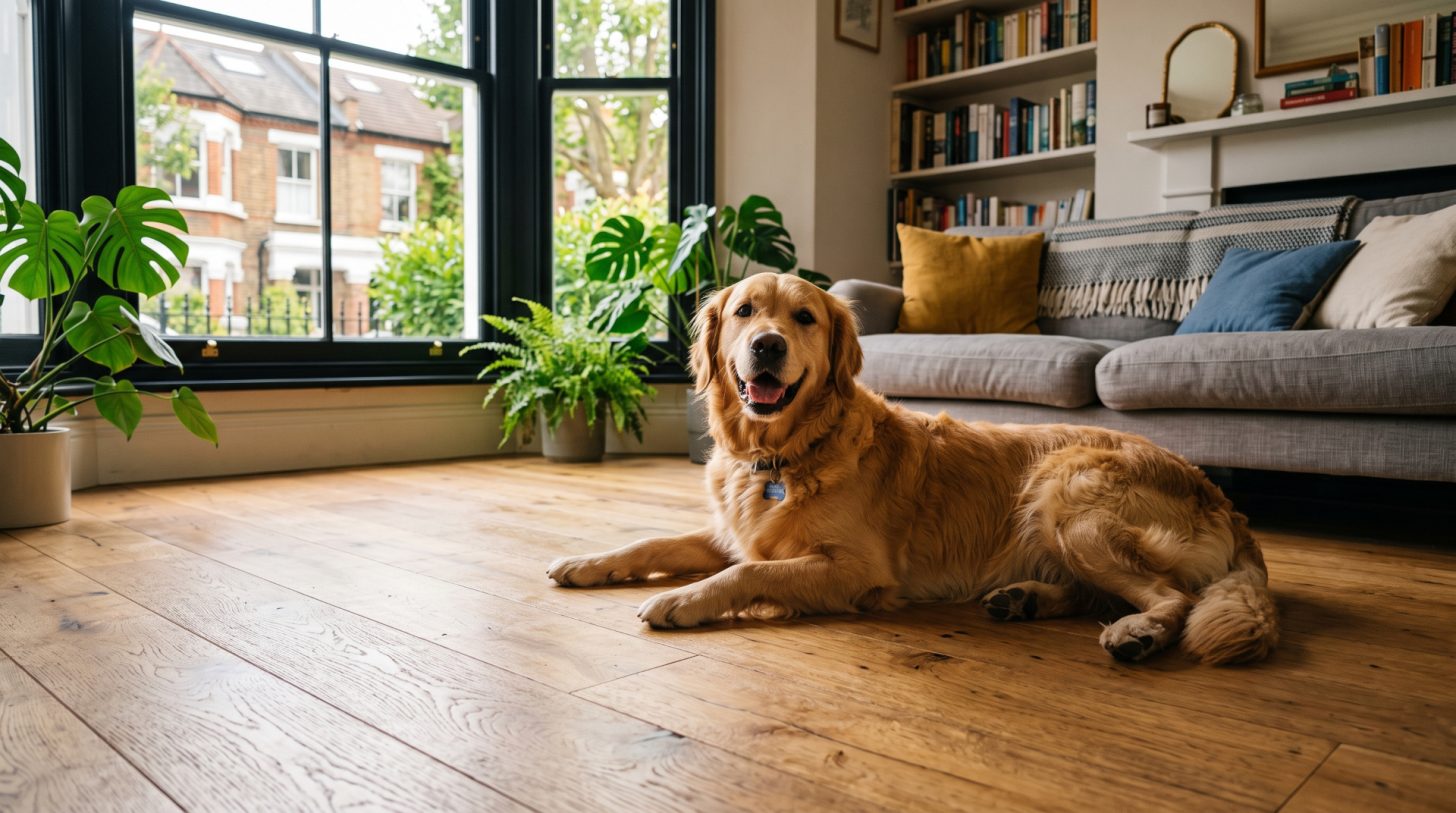
If you share your home with dogs or cats, choosing the right flooring is one of the most important interior design decisions you can make. Pets bring plenty of joy, warmth, and laughter to a household, but their daily activities can also be incredibly hard on floors. Muddy paws, sharp claws, water spills from drinking bowls, and the occasional toilet accident can all take a heavy toll on your home over time.
Fortunately, not all wood flooring is created equal. Some timber options, manufacturing constructions, and surface finishes are far better suited to busy, active homes with pets than others.
The best wood floor for pets combines durability, high level of scratch resistance, reliable moisture protection, and easy maintenance. While no genuine timber floor is completely immune to wear and tear, selecting the right type of wood species, finish, and overall construction can help your flooring stay looking beautiful, pristine, and stylish for many years to come.
This comprehensive guide explains exactly which wood flooring is best for pets, what key features to look out for when shopping, which woods to actively avoid, and how to keep your floor in excellent condition even if your four-legged friends occasionally have accidents.
Jump to section
Why Choosing the Right Wood Flooring Matters for Pet Owners
Pets naturally put far more strain and abrasive wear on residential flooring than people alone. Dogs running enthusiastically through the house, cats chasing toys across hallways, and muddy paws returning from rainy walks all create extra daily wear. Large, heavy dog breeds in particular can easily leave deep scratches and structural dents if the flooring material you install is too soft.
Moisture is another major concern for pet owners. Water bowls that get splashed, wet paws from the garden, and unexpected puppy toilet training accidents can all seep deep into the wood grain if they are not cleaned up quickly. Over time, this standing moisture may cause dark staining, unsightly wood swelling, warping, or even permanent structural damage to the planks.
Investing in the right, highly resilient flooring from the very beginning can save you both a significant amount of money and future frustration.
Solid Wood Flooring vs Engineered Wood Flooring for Pets
One of the first decisions UK homeowners face when browsing showrooms is whether to choose traditional solid wood flooring or modern engineered wood flooring.
Solid wood flooring is made from a single, continuous piece of hardwood throughout its entire thickness. It is highly valued because it can be sanded down and professionally refinished several times during its lifetime, making it a long-lasting, multi-generation investment. However it is important to remember that with solid wood floors you are unable to use underfloor heating and you will have a lot more movement due to temperature and moisture changes than you will with an engineered wood.
Engineered wood flooring consists of a genuine hardwood top layer (known as the wear layer) bonded securely to multiple underlying layers of high-density plywood or core materials. This multi-layered cross-ply construction makes the planks much more stable when exposed to changes in room temperature and indoor humidity.
For homes with pets, engineered wood flooring is widely considered the superior option. Because of its structural design, it is far less likely to expand, cup, warp, or contract when exposed to occasional moisture spills or changing indoor humidity levels caused by pet life.
The Best Hardwood Species for Pets
Not all hardwood species perform equally well under pressure. Some timbers are naturally much harder, denser, and more resilient than others. When selecting a species, it helps to look at the Janka hardness scale, which measures the resistance of a wood species to denting and wear.
Oak Flooring
Oak remains one of the absolute most popular and time-tested choices in the UK. It offers an excellent, practical balance between everyday durability, affordability, and highly attractive grain patterns. European oak is exceptionally strong and resilient enough for most active family homes. Its naturally prominent grain also hides minor surface scratches and dust much better than many smoother, exotic woods. We offer a huge section of floors that are all in an oak finish for this reason. This along with our floors being brushed and UV oiled means that the floors have an added layer of protection. We have a huge stock collection as well as offering the bespoke wood flooring range
Maple
Maple possesses an incredibly fine, consistent grain and offers excellent natural resistance to heavy dents. It creates a clean, bright, and highly modern appearance while standing up remarkably well to regular, high-traffic pet activity. However, because its grain is so smooth, very deep scratches can sometimes be more visible on maple than on a highly textured wood like oak.
Walnut
Walnut provides an undeniably unique and luxurious finish, but it is physically softer than oak or hickory. Although beautiful, its darker tones and softer composition mean it may show claw scratches, dust, and pet hair much more easily in homes with energetic, fast-running pets.
Ash
Ash combines an attractive bold grain with impressive physical toughness and elasticity. It is becoming an increasingly popular option for modern UK families wanting a hard-wearing, light-coloured, and naturally robust floor that can easily withstand claws and heavy foot traffic.
Hardness Matters: The Importance of Dense Timber
When choosing wood flooring for pets, timber hardness is one of the single most important factors to consider.
Harder wood species resist deep scratches, dents, and heavy claw marks much better than softer species (such as pine, fir, or cherry). Although no real wood floor is completely scratch-proof, selecting a highly dense hardwood species significantly reduces the amount of visible wear, pressure marks, and compression dents your floor will gather over time.
Choose the Right Finish to Protect Against Claws and Scuffs
The protective finish applied to the surface of your flooring plays a major role in shielding the raw wood fibres from pet activity and moisture.
| Finish Type | Scratch Resistance | Maintenance Level | Ease of Repair | Ideal For |
| Matt Lacquer | Very High | Low | Low (Requires resanding) | High-traffic pet areas and busy family rooms |
| Satin Lacquer | High | Low | Low (Requires resanding) | Homeowners wanting a subtle, elegant sheen |
| Natural Oil | Moderate | Medium to High | High (Easy localized repairs) | Rustic homes where scratches can be spot-repaired |
Matt Lacquer
Matt lacquer creates a highly durable, tough protective barrier that sits directly over the timber. It offers excellent scratch resistance while maintaining a low-glare surface that naturally hides minor scratches, scuffs, and dusty paw prints.
Satin Finish
Satin finishes provide slightly more sheen and light reflection than matt, while still disguising everyday pet marks and hair much better than highly reflective, high-gloss finishes.
Oil Finish
Oiled finishes penetrate deep into the timber pores to strengthen the wood from within, rather than sitting as a hard film on top. One major advantage for pet owners is that small, scratched, or damaged areas can often be sanded locally and spot-repaired with a touch-up oil, without needing to refinish or sand the entire room. However, oiled floors generally require more regular maintenance and re-oiling than low-maintenance lacquered floors.
Avoid High Gloss Finishes
High-gloss finishes may look stunning and glamorous in a showroom, but they behave like a mirror. They tend to highlight and reflect every single scratch, dusty footprint, smudge, and loose pet hair in the room. For homes with animals, matt, extra-matt, or satin finishes are always a much more practical and forgiving choice.
How Wood Colour and Texture Help Hide Pet Activity
Colour Selection
Many people overlook the visual impact of wood colour when choosing flooring for pets. Medium-toned wood (such as natural honey oaks or mid-grey tones) hides dust, loose pet hair, and minor surface scratches far better than very dark or very light flooring. A great example of this is the M100 that we offer. This is one of the most popular colours when it comes to customers that want a wood floor but are trying to navigate the challenge of having pets.
Extremely dark flooring (like wenge or dark charcoal finishes) will highlight light-coloured dog or cat hair every single day, while exceptionally pale or white-washed flooring often highlights dark fur and dark, muddy footprints. Natural, mid-tone oak shades are visually the easiest and most forgiving to maintain.
Surface Texture
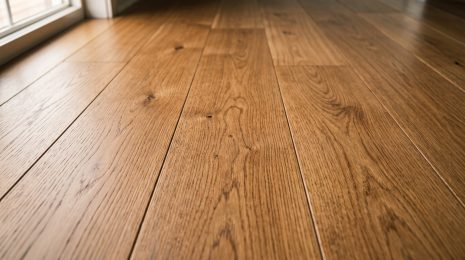
Lightly brushed, wire-brushed, ideal for pet owners. The subtle, physical texture on the surface of the planks breaks up light reflections and helps naturally disguise the small micro-scratches that develop over time. Completely smooth, flat-sanded flooring tends to show every single claw mark, smudge, and paw print clearly under direct light. All of our UV oiled floors that we offer all have been finished with a wire for added texture.
Water Resistance and Pet Accidents
Although real wood flooring should never be left wet or allowed to sit in standing water, some options cope with moisture and liquid spills far better than others.
Engineered wood flooring, due to its stable multi-ply backing, handles moisture and humidity fluctuations far better than solid wood in homes where occasional water bowl spills, messy eating, or pet toilet accidents are likely to occur. However, regardless of the quality of your floor, prompt cleanup of any liquid remains absolutely essential to protect the wood grain from long-term staining and warping.
Practical Ways to Protect Your Wood Floors
Even the toughest, most durable hardwood flooring benefits from a few smart preventative measures in a pet-friendly household.
Use Rugs in High-Traffic Zones
Consider placing attractive, washable, or hard-wearing rugs and runners in the areas of your home that experience the highest amount of pet activity:
- Directly inside external doors to catch mud and water
- Underneath food and water bowls (ideally with a waterproof silicone mat underneath)
- Throughout busy hallways where dogs tend to slide or run
- Along frequently used indoor pet pathways and corners
- At the bottom of stairs where pets land heavily
Keep Pet Nails Trimmed
One of the simplest, most effective, and cost-free ways to protect your real wood floors from scratches is to keep your pet’s nails regularly trimmed and filed. Long, sharp claws act like small chisels, creating deeper scratches and impact dents as pets walk, play, or run across the floor. Routine grooming benefits both your pet’s comfort and the longevity of your wood flooring.
Cleaning Wood Flooring After Pet Accidents
Even the most well-trained pets occasionally have accidents, so knowing how to clean and sanitise your wood flooring correctly is essential to prevent permanent damage.
As soon as you notice urine, vomit, or any other mess, wipe it up immediately using highly absorbent paper towels or a soft microfiber cloth. Avoid allowing liquids to soak into the wood joints, as prolonged moisture can cause dark staining, wood swelling, or damage to the protective lacquer.
Once the area has been dried thoroughly, clean it using a professional, pH-neutral wood floor cleaner designed specifically for timber flooring.
Important Warning: Never use household bleach, harsh ammonia-based chemicals, abrasive scrubbing pads, steam cleaners, or excessive amounts of water on real wood. These can quickly strip the protective finish, dull the surface, and damage the underlying wood fibers.
If an unpleasant or stubborn odour remains after an accident, use a pet-safe enzyme cleaner that is explicitly labelled as safe for sealed, finished wood flooring. Regular sweeping or vacuuming with a soft brush attachment will remove pet hair, grit, and outdoor dirt that can otherwise act like sandpaper under paws and scratch the surface. Wiping muddy paw prints as soon as your pets come indoors will keep your flooring looking its absolute best for years to come.
Daily Maintenance Tips for Pet-Friendly Wood Floors
Looking after beautiful wood flooring with pets in the house does not need to be difficult or time-consuming. Simple, daily habits can make a huge difference to the lifespan of your floor:
- Sweep or vacuum daily with a soft-bristle head to remove abrasive grit, dust, and pet dander.
- Wipe muddy paws with a damp towel at the door before pets enter the main living areas.
- Clean up spills and wet spots immediately to prevent moisture ingress.
- Use protective felt pads under all furniture legs to prevent scratching when pets nudge chairs or sofas.
- Keep water bowls on raised, waterproof mats to contain splashes.
- Avoid dragging heavy furniture across the floor when cleaning or rearranging.
- Trim pet nails regularly as part of your weekly grooming routine.
- Use only specialised, pH-neutral cleaning products designed specifically for finished wood flooring.
Implementing these small, simple tasks will significantly extend the life, shine, and beauty of your flooring investment.
Is Wood Flooring Better Than Laminate for Pets?
Many homeowners find themselves comparing real wood flooring with high-quality laminate flooring.
Laminate flooring often offers excellent initial scratch resistance because of its synthetic wear layer, but it has a major drawback: once it is deeply scratched, chipped, or damaged by moisture, it cannot be sanded, repaired, or refinished. It must be replaced.
Real wood flooring, on the other hand, provides a much warmer, more premium feel underfoot, adds significant long-term value to your property, and can be professionally sanded and refinished to look brand new if it eventually gathers too much wear.
High-quality engineered wood flooring perfectly combines the natural, timeless beauty of genuine timber with improved structural stability, making it an outstanding, high-value investment for pet owners.
Final Thoughts
Choosing the best wood floor for pets ultimately comes down to selecting a durable, dense hardwood species, opting for a practical and forgiving matt finish, and maintaining it with sensible care.
Engineered oak flooring with a premium matt lacquer finish or a Brushed and UV Oiled Finish is widely considered one of the best all-round choices for the majority of UK households
No real wood floor is completely immune to scratches, scuffs, or accidents, but with sensible maintenance, prompt cleanup of spills, and regular pet grooming, a quality wood floor can remain gorgeous, warm, and inviting for decades—even in a home filled with energetic dogs and playful cats.
10 Pros and Cons of Wood Flooring for Pets
Pros
- Texture: Premium hardwood flooring is inherently more durable and long-lasting than many soft flooring materials.
- Moisture Stability: High-quality engineered wood handles changes in temperature and humidity much better than solid wood.
- Forgiving Finishes: Matt and textured finishes hide claws, pet hair, and minor scuffs incredibly effectively.
- Hygienic and Easy to Clean: Wood flooring is incredibly easy to sweep, mop, and sanitise after muddy autumn walks.
- No Hair Traps: Loose pet hair and dander are simple to sweep away, making it a brilliant choice for allergy sufferers.
- Odour Resistant: Unlike carpets, real wood does not trap, absorb, or hold onto pet odours and dander.
- Property Value: Installing high-quality real wood flooring can significantly increase the resale value of your home.
- Sanding and Restoration: Unlike laminate or LVT, real wood can be sanded down, spot-repaired, or completely refinished if needed.
- Natural Variation: Natural wood provides a warm, classic, and highly stylish appearance that complements any home interior.
Cons
- Scratch Potential: Sharp, untrimmed claws can still scratch even the hardest wood species over time.
- Staining Risk: Major pet accidents can stain or discolour the wood grain if they are left unnoticed and not cleaned up immediately.
- Moisture Vulnerability: Solid wood flooring is more vulnerable to moisture damage, swelling, and cupping than engineered wood.
- Gloss Sensitivity: High-gloss finishes show up scratches, wet footprints, and shedding pet hair very easily.
- Initial Cost: Quality hardwood flooring is a premium product and can be more expensive to purchase and install than synthetic options.
- Denting Risk: Some softer wood species (like pine or walnut) can dent under the heavy impact of large dog breeds.
- Water Ring Marks: Standing water around pet bowls can leave permanent marks if not placed on protective mats.
- Required Upkeep: Regular cleaning and occasional long-term maintenance are required to preserve the protective surface finish.
- Chemical Sensitivity: Harsh household cleaners and steam mops can dull or damage the wood’s protective coatings.
- Slip Factor: Highly polished wood flooring can sometimes become slippery for older pets, requiring the use of rugs in key transitional areas.