

A wooden floor is a long-term investment, and keeping it looking its best requires more than regular sweeping and cleaning. Over time, even a well maintained timber floor can begin to lose some of the original look and feel that it had at when first installed. Everyday foot traffic, fine scratches, furniture movement and general standard gradually affect the surface. This is where a wood flooring buffing machine can become an extremely useful piece of equipment.
Buffing machines are designed to work on the surface of a timber floor, helping to clean, smooth and revive its appearance without necessarily carrying out a complete floor sanding process. For homeowners, tradesman to flooring professionals understanding what a buffing machine can achieve is important when deciding how best to maintain your wooden floor and keep it looking its best for longer.
Jump to section
What Is a Wood Flooring Buffing Machine?
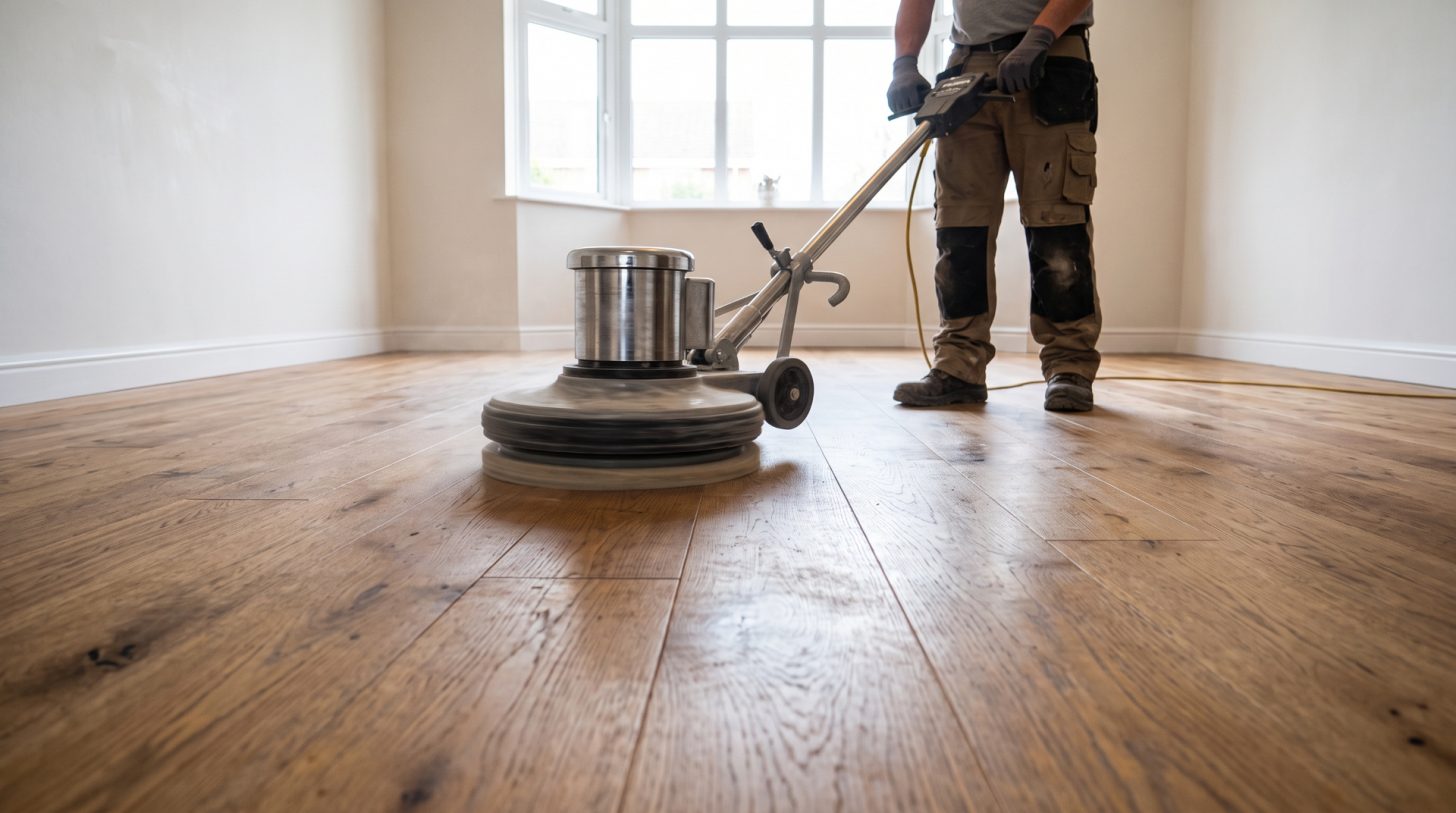
A wood flooring buffing machine is a mechanical floor-maintenance machine designed to rotate a pad,or a brush.
Unlike a traditional floor sander, which is designed to remove a measurable layer of timber or existing finish, a buffing machine is generally used for lighter surface maintenance. Depending on the machine, pad and flooring finish, it can help remove surface contamination, improve the appearance of the finish or be used to apply a light coal of maintenance oil to the top of the surface to give your floor a refresh.
The machine itself typically consists of a motor, rotating head, handle and control system. The operator guides the machine across the floor while the rotating pad performs the required maintenance task.
The result can be a floor that looks cleaner, fresher and better cared for without immediately resorting to a full sanding and refinishing project.
Why Would You Buff a Wooden Floor?
Wood flooring experiences constant use. Even when shoes are removed at the door, small particles of grit and dust can be carried across the surface. These particles can act like tiny abrasives beneath footwear and gradually affect the finish. This can also cause minor hairline scratches or slight discolouration in high traffic areas.
Areas with particularly high traffic often show signs of wear first. Hallways, entrances, kitchens and commercial walkways may begin to appear dull compared with less frequently used parts of the floor.
Buffing can help refresh the appearance of these areas.
It can also be useful between more intensive maintenance procedures. Rather than sanding a floor every time it begins to look tired, a suitable maintenance programme may include cleaning, buffing and reapplication of an appropriate maintenance product when required.
Buffing Is Not the Same as Sanding
One of the most important distinctions to understand is the difference between buffing and sanding.
Floor sanding is a more aggressive process. Sanding equipment uses abrasive materials to remove the existing surface and, where appropriate, a small amount of timber. This can be necessary when a floor has deep scratches, significant wear, damaged finishes or an uneven surface. This would also be used if you are looking to remove the top layer of colour and re finish in a new colour.
Buffing is generally much less invasive. It is primarily concerned with the surface rather than removing substantial amounts of wood.
This makes a buffing machine particularly useful for routine maintenance, provided the existing floor finish and condition are suitable for the process.
However, buffing cannot repair every type of damage. Deep scratches, stains that have penetrated the timber, major dents and seriously worn finishes may require sanding and refinishing rather than simple buffing.
How Does a Wood Flooring Buffing Machine Work?
The machine works by rotating a suitable pad across the flooring surface. The choice of pad is extremely important because different pads are designed for different applications.
A softer pad may be appropriate for polishing or light maintenance, while a more abrasive pad may be used for particular preparation or cleaning applications.
The machine’s rotating action allows the pad to work evenly across the surface when operated correctly. This can help improve the uniformity of the finish and remove certain types of surface residue.
The correct technique matters just as much as the machine itself. An operator needs to understand the flooring material, the finish applied to it and the purpose of the maintenance operation before selecting a pad and machine setting.
It is also important to remember that if you are applying a maintenance oil to rejuvenate the surface you will need to check the pad periodically. If you are doing a large are the pad will become more saturated so changing pads where necessary is important to ensure an eve finish across the floor.
Which Wood Floors Can Be Buffed?
Not every wooden floor should automatically be buffed. The suitability of the process depends largely on the surface finish and the condition of the timber.
Floors finished with suitable oils, hardwax oils or lacquers may require different maintenance methods. A product designed for one finish may be unsuitable for another.
This is why it is important to establish what finish has been applied to the floor before using a buffing machine. If the finish is unknown, professional advice can prevent accidental damage.
Engineered wood flooring can also be maintained using appropriate methods, but care is needed because the construction includes a real timber wear layer over a core. Excessive sanding over the lifetime of an engineered floor can eventually become an issue, making sensible surface maintenance particularly valuable.
Choosing the Right Buffing Machine
There are different types of floor buffing equipment, and the right machine depends on the job.
For smaller domestic projects, a compact machine may be sufficient. Professional contractors working on large floors may require heavier equipment capable of covering substantial areas efficiently.
Machine weight, pad size, speed, manoeuvrability and dust control can all influence performance.
A machine that is too aggressive for the flooring could cause unnecessary damage, while an underpowered machine may not produce the desired result.
The best approach is to select the machine based on the flooring specification and the maintenance objective rather than simply choosing the most powerful equipment available.
The Importance of the Correct Floor Pad
The pad is one of the most important components of a buffing system.
Using the wrong pad can produce poor results or potentially damage the finish. Pads vary in their level of abrasiveness and their intended application.
Before starting work, the operator should understand whether the objective is polishing, light cleaning, preparation or another maintenance task. The correct pad should then be selected accordingly.
Testing the chosen process in a small area is a sensible precaution, particularly when dealing with an unfamiliar floor finish.
Can Buffing Remove Scratches?
This is a common question, and the answer depends on the depth of the scratch.
Very fine surface marks may become less noticeable following suitable cleaning and buffing. However, deeper scratches that have penetrated through the protective finish and into the timber cannot simply be polished away.These would require sanding or the use of a wax repair kit to help rectify the issue as best as possible.
Trying to remove significant damage using increasingly aggressive buffing pads may create a larger problem.
When timber itself has been damaged, sanding may be the appropriate solution. A professional assessment can determine whether the floor needs a light maintenance treatment or more substantial restoration.
Buffing and Floor Maintenance
A good wooden floor maintenance routine starts long before the buffing machine is brought into the room.
Regular vacuuming or sweeping helps remove abrasive particles. Entrance mats can reduce the amount of grit brought onto the floor, while felt pads beneath furniture can help minimise scratches caused by movement.Please make sure that you use the correct hoover attachments to make sure that you do not scratch the floor.
Spills should also be dealt with promptly using cleaning products suitable for the particular flooring finish.
Buffing then becomes one part of a wider maintenance strategy rather than a solution used only after the floor has deteriorated.
Why Professional Buffing Can Be Worthwhile
Although buffing machines can appear straightforward, achieving a professional finish requires knowledge and experience.
An experienced flooring professional will understand how different timber species, finishes and pads interact. They will also know when buffing is appropriate and when the floor requires a different treatment.
Professional equipment can also provide a more consistent result across larger areas, particularly where maintaining an even appearance is important.
For commercial premises, offices, hospitality environments and larger residential properties, professional maintenance can be particularly valuable because floors often experience significantly greater traffic.
Avoid Over-Maintaining the Floor
More maintenance is not necessarily better maintenance.
A wooden floor should be treated according to its actual condition and finish. Excessive mechanical treatment can gradually affect the surface, particularly if inappropriate pads or techniques are used.
The objective should always be controlled maintenance: remove what needs removing, refresh what can be refreshed and preserve as much of the original flooring as possible.
This approach can help extend the useful life of the floor and reduce the need for unnecessary restoration work.
Final Thoughts
A wood flooring buffing machine can be an extremely effective tool when used correctly. It offers a practical way of maintaining the appearance of suitable wooden floors, helping to revive tired looking surfaces and keep them looking presentable between more intensive restoration projects.
The key is understanding that buffing is a maintenance process, not a replacement for sanding when a floor has suffered substantial damage. Choosing the correct machine, pad and maintenance product is essential, as is understanding the finish already present on the timber.
With sensible maintenance, regular cleaning and professional care when required, a quality wooden floor can continue to look impressive for many years. Buffing is one part of that process, providing a controlled way to care for the surface while preserving the natural character and value of the flooring.