

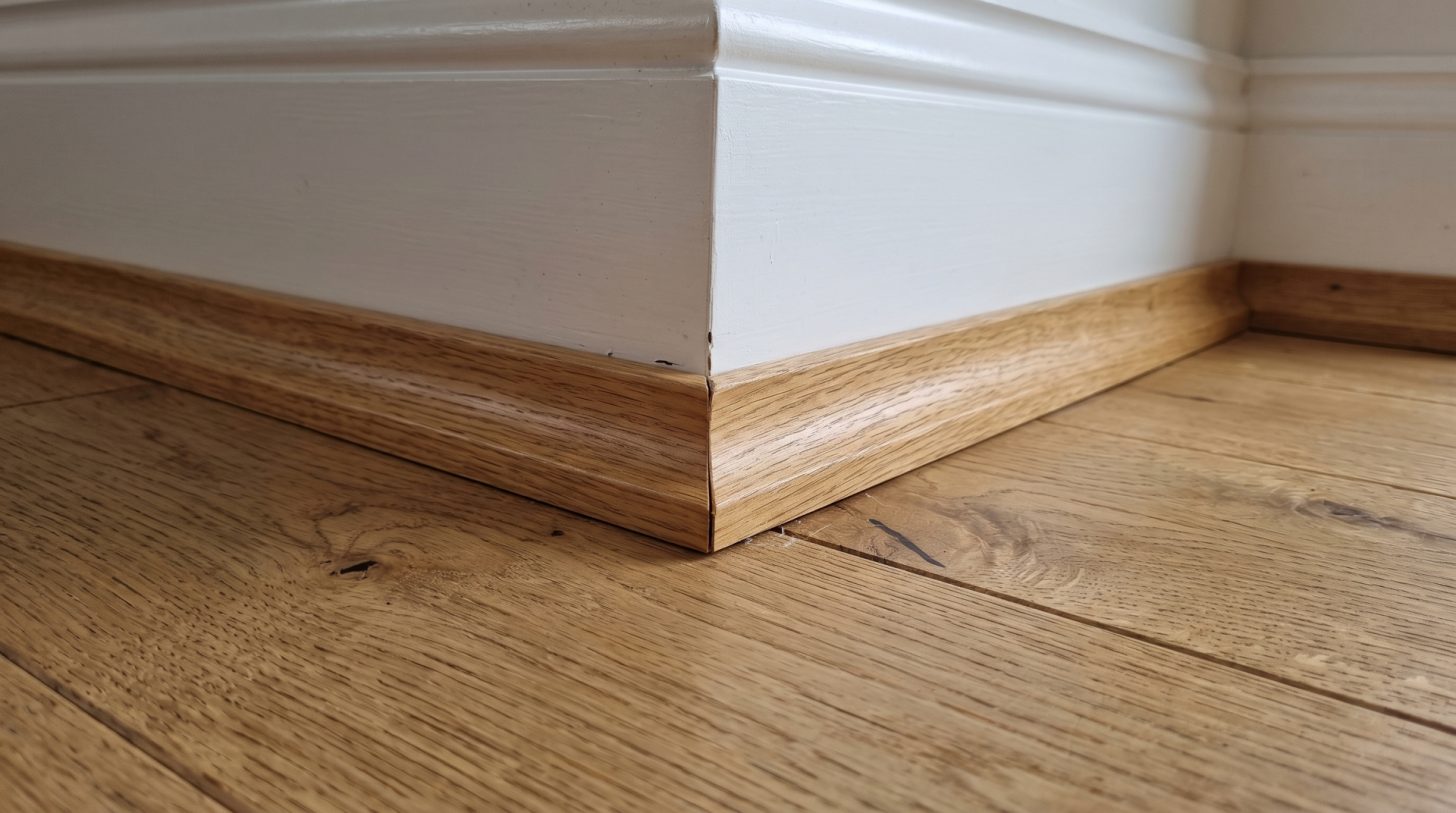
Oak beading gets ordered last and quoted cheapest. It gets fitted in the final hour too, usually by whoever is still holding a pin gun. Which is a shame. This small strip decides whether your floating floor stays free to move or ends up fighting the skirting.
Almost nobody thinks about it twice. Then someone pins it to the boards. The floor heaves up the following summer. My phone rings.
What follows is what oak beading actually does and the fixing rule most people get wrong. It also covers picking a profile that suits your gap instead of whatever is left in the van. By the end you should know what to order. You will know what to check when the fitter arrives too.
(Trim chat. Short and useful.)
Jump to section
Why Oak Beading Exists at All
Your floating floor needs room to move. That means an expansion gap at the edges. Around 10mm is the standing recommendation. The manufacturer’s instructions decide the real number, and they win every argument.
Skirting boards normally cover that gap. Plenty of people would rather not have their skirting lifted and then replastered at the end of a flooring job. Fair enough. I do not blame them. Most jobs I see skip it.
That is where beading comes in. It covers the gap without touching the wall finish. The boards still move underneath it.
(Yes, there is an honest argument for doing the skirting properly. There is also a hallway that needs finishing before the in-laws arrive on Friday.)
Worth remembering what it is for. Glue-down floors have no expansion gap. They need no beading at all. If somebody is selling you beading for a fully bonded floor, ask what problem it solves.
What Is Oak Beading?
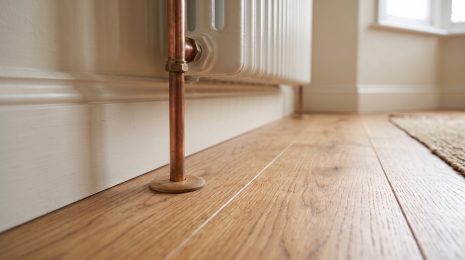
Oak beading is a shaped length of oak that covers the expansion gap where a floating floor meets the skirting. It looks structural. It is not. Decorative and concealing is the whole job.
Most of it is scotia shape. A gentle curve that sheds dust and sits quietly against a skirting board.
The material matters more than people expect. MDF beading is the cheap end and it takes paint beautifully. It hates water, and I will come back to that. Foil-wrapped MDF looks like the clever answer in a bathroom. I watched one in a Sutton bathroom swell straight through its foil edge within six months. The core was still MDF.
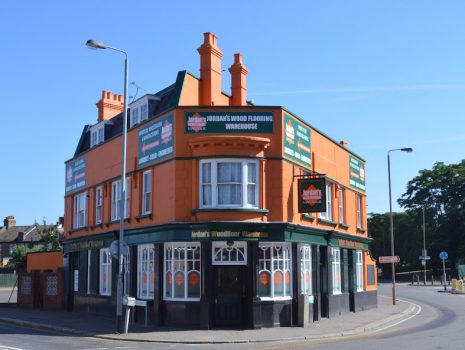
Oak beading is the premium end of the market. Lacquered oak arrives ready to fit. The unfinished veneered solid wood takes whatever finish you want to give it, which is how a trim ends up matching a white skirting or ageing with your floor. Jordan’s Woodflooring keeps both in the Scotia and Beading range, plus colour-selectable laminate and the rest of flooring accessories. We have been answering questions about it since 1992.
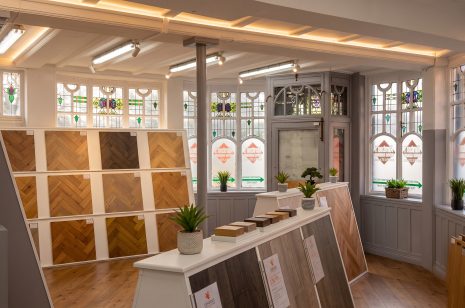
Still choosing the floor as well? Request free samples. Put the boards next to the beading at home. Decisions happen faster in your own light.
(I know. Second article in a row about small strips of wood. The enthusiasm is genuine.)
Why Oak Beading Must Never Touch the Floor
If I could tattoo one rule onto every pack of beading in the country, it would be this. Fix it to the skirting. Never to the floor.
A floating floor moves. The beading is only a cover. It fixes to the wall side and sits above the boards, which slide underneath whenever humidity shifts.
Pin or glue that beading to the boards and the floor is trapped. It cannot expand sideways. It goes up instead. Buckling. Tent ridges through a run that you can spot from the doorway. Then someone’s phone rings. Usually mine.
A pin gun is the professional route. It fires a brad into the skirting and holds instantly. Panel pins do the same job for a careful DIYer with more patience. What I avoid is grab adhesive along the bottom edge. It squeezes out under pressure. If it touches the floor, you have glued the beading to the one thing it was supposed to leave free.
I peeled a length of scotia off a floor in Sutton once. It made a noise like velcro. The boards underneath had been trapped for two summers by then, and the cupping had already set in. That repair needed more than new beading.
Which Profile and Size Your Gap Needs
Gap sizes vary. Oak beading is sold by the gap it covers up to, not by an exact figure. A 19mm scotia typically handles anything from a few millimetres to around 15mm. Where it lands in that range depends on the fix angle. That ‘up to’ on the spec sheet is not the manufacturer being vague.
Height matters when you are joining onto existing skirting. A tall square trim beside standard skirting creates a double-skirting look. It rarely fools anyone. Low-profile flat beading is the safer choice in that situation. It is what I fit most.
Long runs need joining. The join is where amateur jobs show themselves. Two lengths butted together in the middle of a wall look exactly like what they are. A scarf joint sorts it. Both ends get cut at opposite 45 degree angles. The two pieces overlap and the join vanishes under a pin.
(Five minutes for the scarf. I have never regretted spending them.)
Fitting Oak Beading Without Trapping Anything
My sequence on a floating floor is boring and it works. The gap gets checked first. The skirting gets a look over for soundness, because a brad in loose skirting holds nothing. Lengths get cut dry, before any adhesive or pin appears. Then the pinning starts at one end and works along.
Waves in walls are normal. Old houses especially. Where the wall moves behind the skirting I pencil a scribe line on the back of the beading and follow that. Ten minutes with a plane beats a shadow gap you notice every day.
Ends matter at door frames and reveals. I cut them tight and let the next piece take over with the scarf. The lot gets a wipe at the end. Where the beading is oak and staying natural, it gets whatever finish the boards received.
(Everyone wants to skip the dry fit. It shows in the result.)
The flooring fitting guide covers expansion gaps and perimeter detail in full. Read it alongside the manufacturer’s instructions for your floor. Those instructions beat anything I write here.
Wet Rooms, Kitchens and Honest Limits
Honesty time. Oak beading and water are not friends.
A bathroom, a wet room, anywhere a mop lives. Those want a waterproof trim in PVC or a similar plastic. In anything properly wet, the top and bottom edges get sealed with flexible sanitary silicone. Without that, water sneaks under the trim and sits in the expansion gap. The waterproof flooring above it never gets a vote.
Kitchens and utility rooms are judgement calls. Oak beading along a normal run of skirting is fine. Behind the sink or beside the washing machine is a different question. That corner takes splashes and mopping every week of its life. (Much like the thresholds in the last piece.)
Where the beading is painted MDF, remember what it is made of. Paint protects the face. It does nothing for a cut end sitting in a puddle.
Matching the Beading to Your Floor
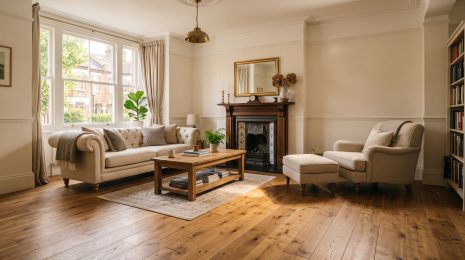
White-painted oak beading against white skirting disappears into the wall. Natural oak frames the floor and matches oak boards. Both work. Honestly, it is the existing skirting that decides this one.
The Wimbledon job is a decent example. Ms Chung’s bedrooms and landing kept their existing skirting. White scotia worked around it against a Kingswood 190mm brushed and UV-oiled oak floor. Nobody looks at the edges in that room. That is the whole idea.
Most beading either gets painted or sits against skirting rather than boards. Colour matching matters less here than with thresholds. Where oak meets oak, order it with the floor. Batches vary. Bespoke finishes more than most. Whether the floor is engineered wood flooring or a made-to-order Bespoke Wood Flooring colour, matching trims in with the order is cheap insurance.
Maintenance follows the finish. Painted beading wants a wipe and the occasional touch-up. Natural oak takes the same treatment as an oiled floor, and the floorcare advice page covers both. The case studies show finished rooms where the edges were planned in rather than rescued later.
Getting Your Oak Beading Ordered
What to send the team is simple. The gap measurement and one picture of the skirting. That usually narrows it to one profile inside a single email.
Still choosing the floor? Free samples first. Match the beading at home rather than under the showroom spots.
Whenever you are ready, contact the team for a quote. Or ring 020 3870 9960 and ask for whoever is on the flooring desk. They are a decent bunch. They would rather talk you out of the wrong profile than discuss a buckled hallway with you next summer. Trade buyers can sort supply and pricing through the trade account at the Summerstown counter.
Remember that phone call in the second paragraph? A length of oak beading pinned to the right surface would have prevented it.